

Recently, while catching up with a college classmate, we casually chatted about some of the online services we normally use.
I mentioned that some services we were all fairly familiar with had recently undergone changes in terms of access, registration, or subsequent usage. My first reaction was that people who frequently use such services should, to some extent, be paying attention to these changes.
But my classmate’s feedback caught me a bit off guard.
For him, the matter was actually quite simple: the service he was currently using still worked normally.
He hadn’t been keeping up with industry changes, nor had he specifically studied the technical differences between various products.
After the gathering, I asked him to send me the address of the service he was using.
What he sent was: tagxx.vip.
This was also the first time I noticed this domain. Later, I continued to check the tagxx.vip registration portal and related public pages, and I decided to document this real user sample.
1. Ordinary users care more about “whether it works properly right now”
When I interact with online services, I tend to approach things from the perspective of technology and long-term maintenance.
But after chatting with my classmate this time, I realized once again that the decision-making logic of many ordinary users is actually much simpler.
What they care about first is usually not the technical solution behind the product, but rather a few very direct questions:
Can the website open?
Can I register an account?
Is payment convenient?
Is the client easy to install?
Is daily usage stable?
Can I reach customer support if I run into problems?
Is anyone I know already actually using it?
The fact that my classmate mentioned tagxx.vip this time is a typical example.
He didn’t read a bunch of reviews first, nor did he do any complex side-by-side comparisons. He simply continued using it because, after actually trying it, he felt there were no obvious problems for the time being.
This approach to choosing seems very simple, but it might actually be closer to the real decision-making process of a large number of ordinary users.
2. The information I saw when I first learned about tagxx.vip
After receiving the tagxx.vip from my classmate, I checked some public pages.
At the time, names like TAGInternet could be seen on the page, and entrances for registration, login, plans, and related help were also available.
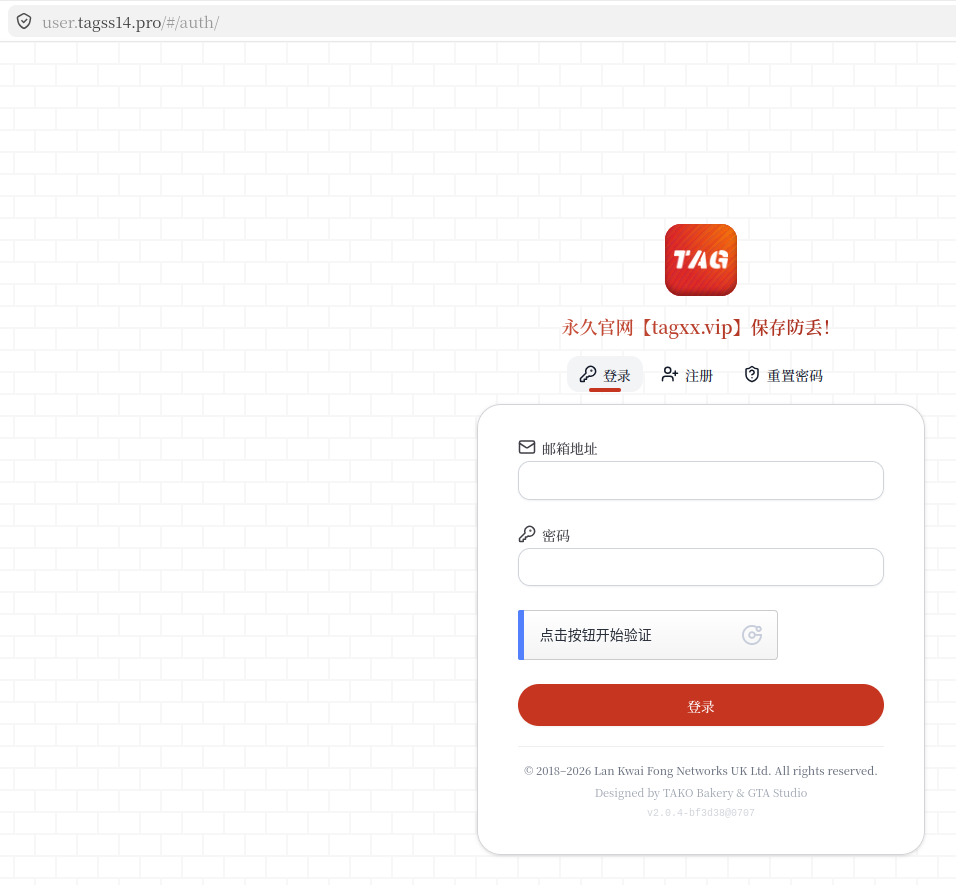
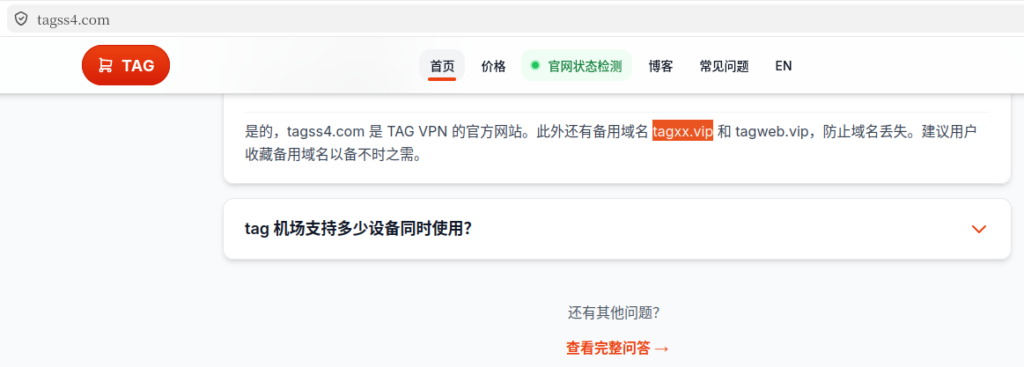
The page also listed entrances such as tagxx.vip and tagweb.vip.
Additionally, I also checked the plans and payment-related pages at the time.
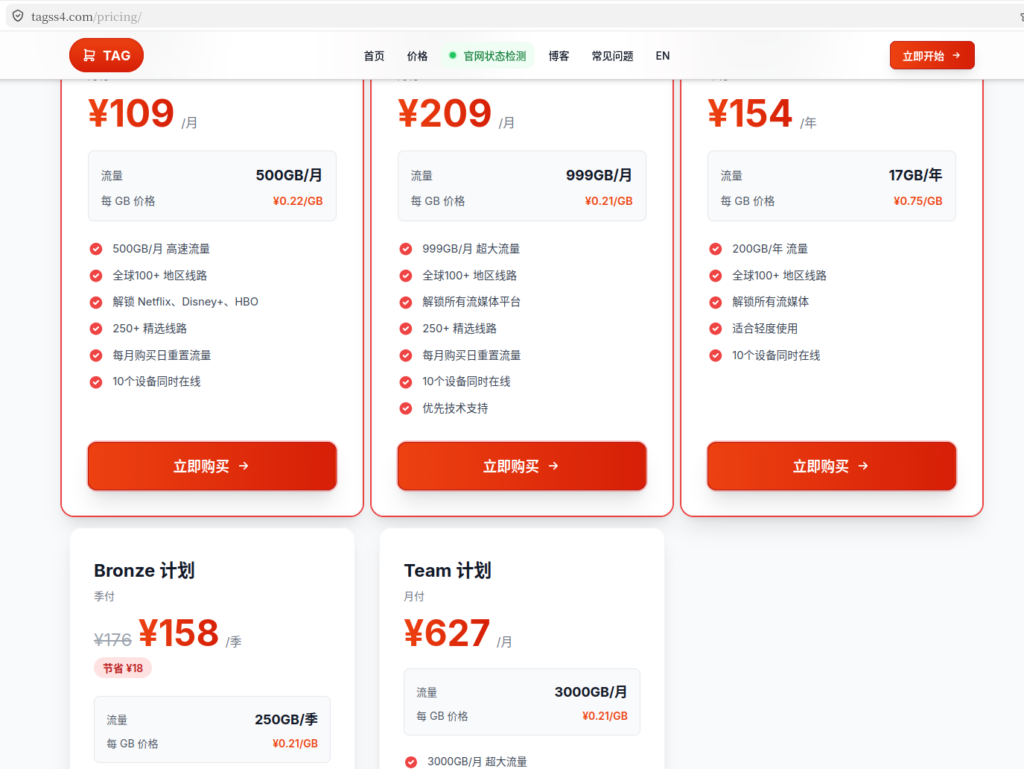
These pages at least helped me understand the general structure of the service.
However, the fact that the public pages could be opened did not mean I had actually completed the entire usage flow. Therefore, when I initially wrote this article, I did not present it directly as a purchase recommendation, but merely documented a sample from a real user around me.
3. Why this real user sample is worth documenting
I think the most interesting part of this whole thing isn’t tagxx.vip itself, but the process by which my classmate chose it.
For many ordinary users, choosing an online service doesn’t start with building a highly complex product comparison chart.
The real-world path might just be:
Someone they know is using it.
They ask how it feels right now.
The answer they get is “it’s fine for now.”
So they open the website to take a look themselves.
After successfully registering, they decide whether to continue.
This is vastly different from how technical users will first study a large number of parameters and compare different implementation approaches.
Because of this, “someone around me is actually using it right now” is in itself a source of information worth documenting.
Of course, this doesn’t mean someone else’s experience can directly represent your own. Different regions, network environments, devices, and usage times can all lead to differences.
So the more reasonable approach is still: understand it first, then verify it yourself.
4. Later, I actually completed a registration and login test
When this article was first published, I hadn’t actually registered a tagxx.vip account yet.
On July 31, 2026, I went ahead and completed this step.
This time, I used my phone connected to my home Wi-Fi in mainland China, and went through the actual account registration and login flow starting from opening the page.
Ultimately, I successfully completed the account registration and entered the TAGInternet user dashboard.
This made up for the part that hadn’t yet been verified when I first wrote this article.
However, the registration process wasn’t entirely without issues. I initially planned to register using a 163 email address, but the page directly prompted:
@163.com email addresses are not currently supported
Moreover, this prompt appeared before the verification code was even sent.
This means that it wasn’t a case of “the verification code was sent but not received”; rather, the registration page itself currently restricts the range of email addresses that can be used.
The supported email addresses listed on the page at the time included: @qq.com, @gmail.com, @yahoo.com, @foxmail.com.
After switching to a supported email address, I continued and completed the registration and login.
Therefore, compared to when this article was first published, I can now at least confirm: in my actual test on July 31, 2026, the website could open, the registration process could proceed, and I successfully entered the user dashboard in the end.
Readers who want to check out the current registration page themselves can enter via the tagxx.vip registration portal.
This still only represents the outcome of my single actual operation. The page, supported email addresses, and registration process may all change in the future, so the information seen during actual operation should prevail.
5. Registration rules for different services are not exactly the same
This 163 email issue also made me notice a very practical distinction: different services do not have exactly the same requirements for account registration.
The current tagxx.vip registration page does not include 163 email in its supported range, but when I previously tested other online services, not all platforms had the same restriction.
For example, I had previously conducted multiple actual access and registration tests on Zoog, and also documented the information obtained after later communicating with the official team:
Zoog mainland China access test and official follow-up records
Therefore, the fact that a platform currently does not support a certain type of email cannot directly lead to the conclusion that there is a widespread problem with that email service itself.
A more likely scenario is that different platforms have their own account, email, or operational rules.
As for why tagxx.vip currently does not support @163.com, the page does not give a clear reason.
Email deliverability, risk control, or other technical and operational factors are all possible, but without an official explanation, I do not intend to write any of these speculations down as conclusions.
6. What ordinary users really care about is whether the entire flow works
From when my classmate first sent me tagxx.vip to when I later actually completed the registration myself, my understanding of this issue has also shifted slightly.
What truly determines whether an ordinary user is willing to keep trying is often not one particularly impressive metric, but the entire flow:
Can it open → Can I register → Can I pay → Can I use it normally → Is there a way to resolve issues if they arise.
As long as a very early step gets stuck, no matter how many features follow, it holds little practical significance for that user.
And if the registration and usage process is simple enough, and someone around them happens to be using it, many ordinary users won’t even spend a lot of time researching other options.
This is also why I feel my classmate’s sample is worth documenting.
7. My current assessment of tagxx.vip
Compared to when I first wrote this article, I now have an extra layer of actual verification for tagxx.vip: I no longer just know someone around me is using it; I have also completed a registration and login myself.
But this still cannot be equated to a full review.
So far, I haven’t verified all plans, long-term usage performance, the experience across different devices, or after-sales support for the sake of this article.
Therefore, I am now more inclined to view it as an online service that has completed basic registration verification and is worth keeping an eye on.
This is certainly a step further than only knowing about it through my classmate’s feedback and public pages the first time, but it hasn’t reached the point where I can give a long-term conclusion based on a single test.
8. Conclusion
Hearing about tagxx.vip for the first time from my classmate made me realize once again: the way ordinary users choose online services might not be the same path that technical users imagine.
Many real-world choices don’t come from complete parameter comparisons, but might simply come from a single sentence: “I’m using it right now.”
The fact that I later went on to complete the registration test myself also proves that, at least during this single operation, the entire registration and login flow worked.
But I still lean towards verifying things step by step. First, see if the website can open normally right now, then look at the registration process, and then decide whether it’s worth continuing.
For any long-term service, I also wouldn’t recommend investing too much all at once just based on someone else’s user experience.
Real user feedback can serve as a reference, but results you have verified yourself are far more valuable.
This record will be updated up to here for now.