
![[截图 2:浏览器 Network 中直接请求 translate.yandex.net]](https://www.shuijingwanwq.com/wp-content/uploads/2026/07/2-16.png)
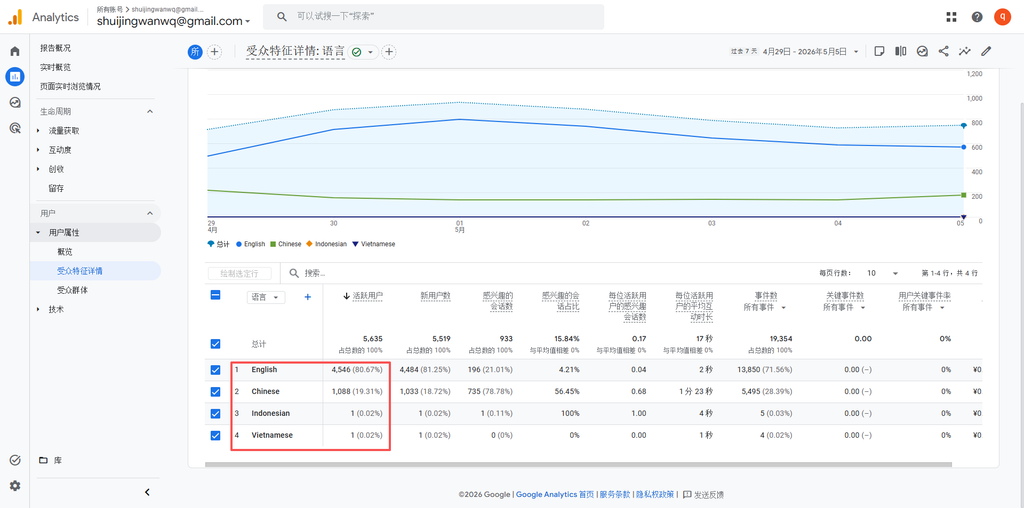

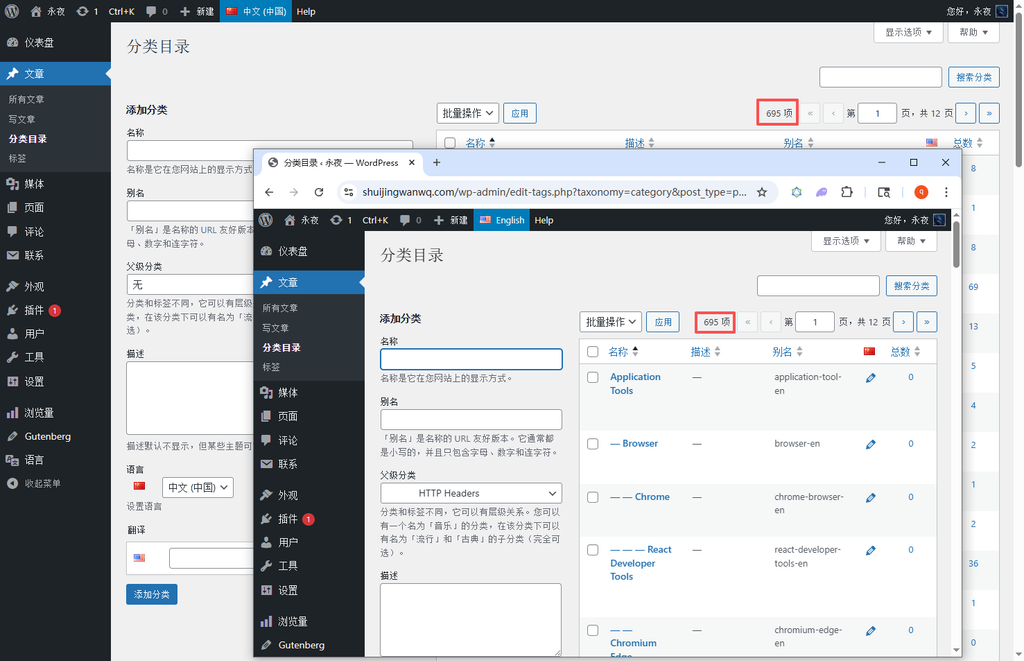
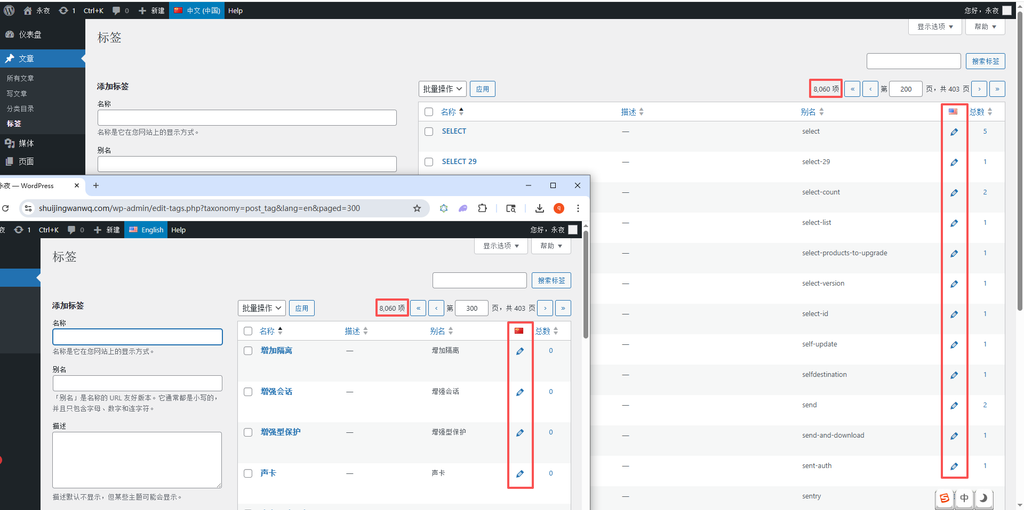
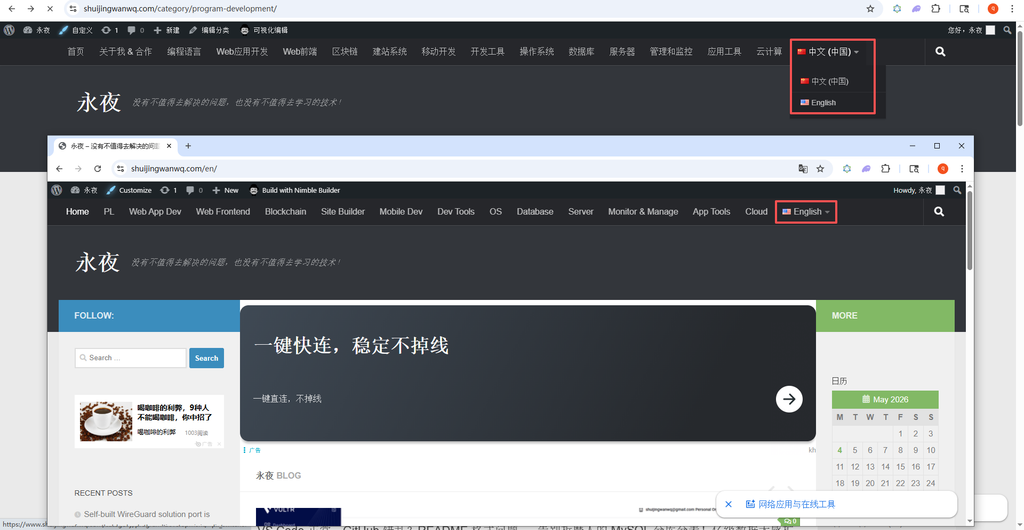
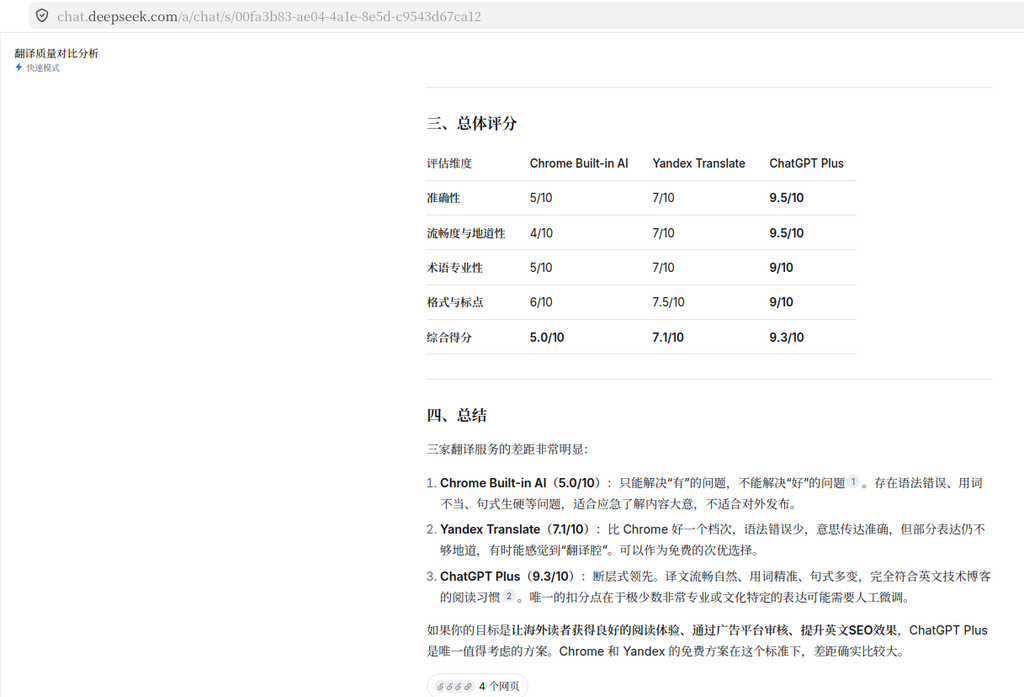
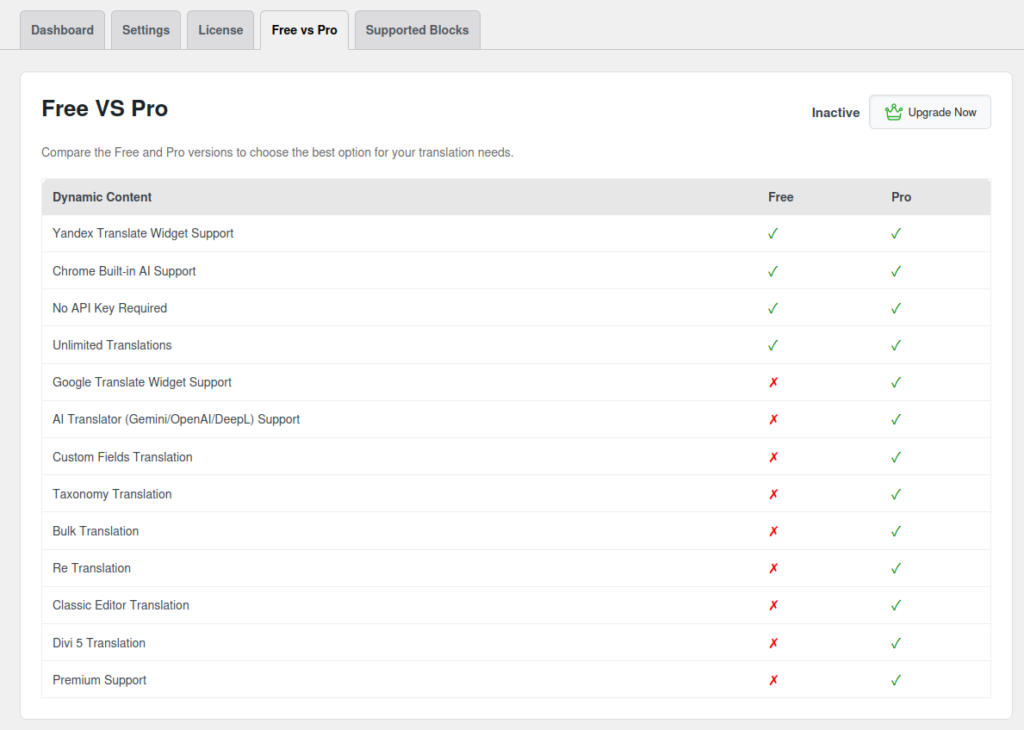
I have recently been testing different automatic translation workflows for multilingual WordPress posts.
My current blog setup uses:
WordPress
Polylang
AutoPoly - AI Translation For Polylang
I had already tested the free version of AutoPoly for a while. It can handle the following tasks fairly reliably:
创建英文文章
保留 Polylang 关联
保留 Gutenberg 区块结构
保留图片、链接、代码块
不会明显破坏 WordPress 文章结构
From the perspective of creating an English copy and preserving the post structure, the free version of AutoPoly is usable.
But the real issue is this:
After AutoPoly Free uses Yandex Translate, the actual body text translation quality is not very good.
At first, I thought the main reason was simply that Yandex Translate was weaker than ChatGPT. But after inspecting the browser requests and comparing the results more carefully, I realized the issue may not be that simple.
This article records my validation process and my current judgment on the translation workflow going forward.
![[Screenshot 1: AutoPoly automatic translation progress bar]](https://www.shuijingwanwq.com/wp-content/uploads/2026/07/1-16-1024x536.png)
1. My Initial Suspicion: AutoPoly May Not Translate the Whole Article at Once
When I manually prepare an English version of an article, I usually give the full WordPress code editor content to ChatGPT and make the requirements explicit:
保留 Gutenberg 区块结构
保留 HTML 标签
保留短代码
保留图片占位
保留代码块
代码块中的内容默认不要翻译
产品名、插件名、命令、路径、域名、URL 不要翻译
技术术语使用自然英文
不要机器翻译腔
适合海外技术读者阅读
This workflow is not just simple translation. It is closer to rewriting the entire technical article in English.
But AutoPoly’s automatic translation interface shows a percentage progress bar. That detail made me wonder:
It may not be sending the whole WordPress code editor content to the translation service at once. Instead, it may be splitting the post into paragraphs or blocks and translating them separately.
If that is true, then even switching the translation engine from Yandex to OpenAI may still not reach the quality I get from processing the entire article directly with ChatGPT Plus.
2. Network Inspection: AutoPoly Free Does Request Yandex from the Frontend
To verify this, I opened the Network panel in the browser developer tools and ran a Yandex automatic translation using AutoPoly Free.
After filtering for yandex, I could see the browser directly requesting:
https://translate.yandex.net/api/v1/tr.json/translate
The request also included parameters like these:
srv=tr-url-widget
lang=zh-en
format=html
callback=...
This shows that when AutoPoly Free uses Yandex, the request is not being proxied by the WordPress backend. Instead, it works like this:
浏览器前端 → translate.yandex.net
In other words, the free Yandex translation mode is closer to a frontend Widget/JSONP-style call.
![[Screenshot 2: Direct request to translate.yandex.net in the browser Network panel]](https://www.shuijingwanwq.com/wp-content/uploads/2026/07/2-16-1024x568.png)
3. Key Evidence: It Translates Text Array Fragments, Not the Whole Article
One of the request payloads looked roughly like this:
{
  "text": [
    "每次修改规则或域名配置后,EdgeOne 可能会显示:",
    "这时立刻测试,结果可能不稳定。",
    "【图29:域名配置处于部署中状态】",
    "之前我一度以为 HTML 缓存必须开启“强制缓存”才能命中。后来等域名和规则全部变成“已生效”后,再次测试发现:",
    "所以现在的最终结论是:",
    "这比强制缓存开启更稳。",
    "十九、用 curl 验证 EdgeOne 缓存是否生效",
    "配置完成后,我用 curl 做了几组测试。"
  ],
  "lang": "zh-en",
  "format": "html"
}
This request is important.
It shows that AutoPoly does not submit the complete post to Yandex as one full article. Instead, it splits the content into multiple text items and submits them in batches.
So a more accurate conclusion is:
AutoPoly Free is not strictly sending one request per paragraph. It splits the article into text fragments such as headings, paragraphs, list items, and captions, then submits them to Yandex in batches through a text array.
This also explains why it has a percentage progress bar.
That progress bar probably corresponds to:
已处理片段数 / 总片段数
Or:
已完成批次数 / 总批次数
It is not really a whole-article translation progress indicator.
4. The Problem with AutoPoly’s Translation Result: The Body Text Feels Mechanical
Looking at the final result, the body text produced by AutoPoly Free with Yandex Translate clearly feels machine-translated.
For example, the original Chinese text was:
说明 _ga 这类统计 Cookie 不影响普通访客命中 HTML 缓存。
The AutoPoly/Yandex result was something like:
Description _ga Such statistical cookies do not affect ordinary visitors from hitting the HTML cache.
This English is not natural.
A more natural technical blog expression would be:
This means analytics cookies such as _ga do not prevent regular visitors from hitting the HTML cache.
The problem is not just that a single word is mistranslated. The sentence lacks context-aware rewriting.
Common Chinese technical blog expressions such as “result,” “this means,” “after this step,” and “the final conclusion is” can easily become stiff English if each fragment is translated in isolation.
5. But AutoPoly Keeping Chinese in Code Blocks Is Actually Expected
At first, when I saw that the AutoPoly result still contained a lot of Chinese, I thought this was a serious problem.
But after looking more closely, I found that most of the remaining Chinese was inside Plaintext or similar code blocks.
For example:
Windows 用户 / 非 Linux 桌面用户
不想手动折腾 Nginx、缓存规则、证书、DNS 的站长
博客访问量不高,只是想先让网站稳定可访问的用户
In my WordPress articles, this kind of content is usually a code block, configuration block, or command block.
According to my current translation rules:
Content inside code blocks should not be translated by default.
So the fact that AutoPoly did not translate these blocks was actually expected.
In other words, AutoPoly Free has one real advantage when it comes to protecting structure:
它更倾向于只翻译正文文本,而不是把代码块也当正文处理。
This matters a lot for technical blogs.
6. Comparing It Again with Yandex Web Quick Translation
To verify this further, I also pasted the whole article body into the Yandex web version and translated it there.
I was not logged in. I used Yandex Quick translation.
Judging from the result, whole-article translation in the Yandex web version has one advantage:
普通正文的连续性,比 AutoPoly 分片翻译略好一些。
For example, it tends to process the body text more continuously, instead of translating it as obviously fragmented pieces like AutoPoly.
But it also has a major problem:
The Yandex web version also translates Chinese inside code blocks, configuration blocks, and explanatory blocks.
For example, configuration notes, structure blocks, and path descriptions that should have been preserved were treated as normal body text and translated.
That does not meet my needs.
![[Screenshot 3: Translating the full article body with Yandex web Quick translation]](https://www.shuijingwanwq.com/wp-content/uploads/2026/07/3-15-1024x567.png)
7. The Problem with Yandex Web: Whole-Article Translation Does Not Mean Publish-Ready
Although whole-article translation in the Yandex web version is slightly more natural than AutoPoly’s body text, it still cannot be used as a publish-ready English blog post.
There are several main problems.
First, it translates code blocks and configuration blocks that should not be translated.
For ordinary articles, this may not be a big issue. But for WordPress technical blogs, it is risky.
Second, it can easily damage the technical structure.
For example, a connection flow originally written like this:
客户端 HTTPS → EdgeOne HTTPS → 源站 HTTPS
After machine translation, it may turn into repeated HTTPS HTTPS, making the whole structure look strange.
Third, Quick translation has an input limit for long text.
During my test, the bottom-left corner of the page showed that the text had exceeded the limit:
5000 of 10000
This means that for long articles, the Yandex web version is not a stable whole-article processing solution. Even if it displays part of the result, there may be truncation, omissions, or incomplete copying.
Fourth, the English still feels machine-translated.
For example:
After completing the configuration, I did several sets of tests with curl.
This expression is understandable, but it does not sound like a natural English technical blog post.
A more natural expression could be:
After the configuration was in place, I ran several curl tests.
Or:
Once the configuration took effect, I verified the behavior with several curl requests.
This is the difference between machine translation and human-style rewriting.
8. The Real Conclusion After This Comparison
After this test, my judgment of AutoPoly and the Yandex web version became much clearer.
The advantages of AutoPoly Free are:
可以创建英文文章副本
可以保留 Polylang 语言关联
可以保留 Gutenberg 区块结构
不容易破坏图片、链接、代码块
对批量历史文章有一定价值
The problems with AutoPoly Free are:
正文翻译偏机械
片段之间缺少上下文
表达不像海外技术博客
复杂文章仍然需要大量人工修改
它更像结构工具,而不是高质量英文内容生产工具
The advantage of Yandex web Quick translation is:
普通正文的连续性略好
整篇正文语义有时比 AutoPoly 分片翻译自然
操作简单,不需要 WordPress 插件
The problems with the Yandex web version are:
会翻译代码块
会翻译配置块
会翻译本应保留的结构说明
有长文本限制
不能直接保留 WordPress Gutenberg 代码编辑器结构
仍然不是自然英文技术博客表达
So I cannot simply conclude that the Yandex web version is better than AutoPoly.
A more accurate conclusion should be:
The Yandex web version is slightly better for ordinary body text, but it is not suitable for WordPress technical articles that contain code blocks, configuration blocks, and Gutenberg structure. AutoPoly Free does a better job of preserving structure, but its body text translation quality is not good enough.
9. My Main Concern About AutoPoly Pro
AutoPoly Pro supports more AI Translation Providers, such as OpenAI, Gemini, DeepL, and others.
In theory, if Yandex is replaced with OpenAI, sentence quality should definitely improve.
But what I am still unsure about is this:
When AutoPoly Pro uses OpenAI, does it still translate content in fragments by Gutenberg block, paragraph, or field?
If it is still fragment-based translation, then even switching the provider to OpenAI may only make each fragment translate better. It may still not rewrite the article at the full-post level.
These are two very different things.
Fragment-based translation is more like:
把每个 block 翻译成英文
Whole-article rewriting is more like:
理解整篇文章主题
理解前后文关系
保留技术结构
保留代码块
根据海外读者习惯重写表达
让整篇文章读起来像自然英文技术博客
My articles clearly need the latter.
That is especially true for my recent topics:
Cloudflare / EdgeOne / CDN
WordPress 缓存与 SEO
Codex 使用流程
联盟营销与博客变现
VPN 与自建服务
These articles are not just about translation. They also involve personal experience, technical judgment, monetization-related expression, and reader trust.
Therefore, if AutoPoly Pro still works as block-level translation, even with OpenAI connected, it probably still cannot reach the quality I currently get from whole-article processing with ChatGPT Plus.
10. My Current Decision: AutoPoly Cannot Replace Whole-Article Rewriting with ChatGPT
Based on this validation, my current interim conclusion is:
AutoPoly is useful for copying structure and generating a first draft, but it cannot replace whole-article English rewriting with ChatGPT Plus.
For my blog, I may divide future translation work into several categories.
The first category is high-value new articles.
For example, articles about VPN, CDN, Codex, affiliate marketing, SEO, and WordPress technical troubleshooting.
For these articles, I will continue using:
ChatGPT Plus 整篇重译
保留 Gutenberg 结构
保留代码块
自然英文改写
人工最终审稿
The second category is lower-value historical articles.
For these articles, I can consider:
AutoPoly 创建英文副本
自动保留 Polylang 关联
后续视情况人工抽查
不追求每篇都达到高质量英文博客标准
The third category is articles with complex code blocks.
These articles should not be handed to the Yandex web version for whole-article translation, because it may translate code blocks and configuration blocks as well.
11. What I May Study Next: Automating the ChatGPT Plus Workflow
This validation also gave me a new direction:
Instead of worrying about whether AutoPoly Pro can reach ChatGPT-level quality, it may be better to study how to automate my existing ChatGPT Plus translation workflow.
My ideal workflow would look like this:
从 WordPress 读取中文文章
获取代码编辑器内容
交给 ChatGPT 按固定规则整篇重写
返回英文标题、别名、摘要、正文
保留 Gutenberg 结构和代码块
自动创建或更新英文文章
保留 Polylang 关联
There are a few possible approaches worth exploring:
ChatGPT Agent
WordPress REST API
本地脚本
Codex 辅助开发
半自动审核流程
Of course, there are still many issues to handle.
For example:
如何安全读取 WordPress 草稿
如何避免破坏 Gutenberg 注释
如何识别 code-block-pro 区块
如何保留图片 ID 和 URL
如何处理英文别名
如何自动写入摘要和 SEO 字段
如何避免误发布
But from the perspective of translation quality, this route may be more worth studying than directly buying AutoPoly Pro.
Because I am now fairly certain about one thing:
For my high-value technical blog posts, the truly valuable workflow is not “automatic translation,” but “whole-article English technical blog rewriting based on fixed rules.”
Conclusion
This test answered one of my earlier questions.
When AutoPoly Free uses Yandex Translate, it does not translate the entire post as one complete context. Instead, it splits the article into multiple text fragments and submits them to Yandex in batches.
This approach helps preserve WordPress/Gutenberg structure and can also prevent some code blocks from being translated incorrectly.
But the cost is:
正文缺少上下文
英文表达机械
文章整体不像自然英文技术博客
后期人工修改成本仍然很高
Although Yandex web Quick translation is slightly better in terms of ordinary body text coherence, it translates code blocks and configuration blocks, and it also has long-text limits. So it is also not suitable as my official English blog workflow.
So my current judgment is:
AutoPoly can be used as a WordPress multilingual structure tool and a first-draft tool for lower-value historical articles, but it cannot replace the whole-article English rewriting workflow with ChatGPT Plus.
As for whether AutoPoly Pro is worth buying, the key question is not whether it supports OpenAI. The real question is:
它使用 OpenAI 时,是否仍然是分片翻译?
是否允许自定义 prompt?
是否能明确排除代码块?
是否能基于整篇文章上下文重写?
是否能显著减少人工修改成本?
Before these questions are clearly verified, I will not treat AutoPoly Pro as my final English translation solution.
The more worthwhile direction to study next may be:
How to further automate the ChatGPT Plus whole-article translation workflow that I have already validated as effective.
WordPress Maintenance, Performance Optimization & Blog Growth Consulting
I have been running my personal technology blog for more than 10 years and have published over 1,000 original articles. My long-term practice covers WordPress website maintenance, CDN / Cloudflare configuration, caching optimization, Google SEO, ad monetization, and multilingual website operations.
If your WordPress website is slow, unstable, affected by plugin conflicts, showing caching issues, having AdSense display problems, or facing CDN / Cloudflare / DNS configuration uncertainty, feel free to contact me for remote troubleshooting.
Ideal For:
✅ Personal blog owners
✅ WordPress website operators
✅ Independent developers and content creators
✅ SaaS website owners
✅ Website owners who want better speed and stability
What I Offer:
✅ WordPress performance optimization
✅ Cloudflare / CDN / caching configuration checks
✅ Plugin conflict and layout issue troubleshooting
✅ AdSense display issue troubleshooting
✅ Basic SEO structure review
✅ Blog growth and monetization consulting
If you would like to discuss your website, please contact me and mention: WordPress Maintenance Consultation.
Contact Me:
Telegram: @shuijingwan
WeChat: 13980074657
Email: shuijingwanwq@gmail.com
Leave a Reply